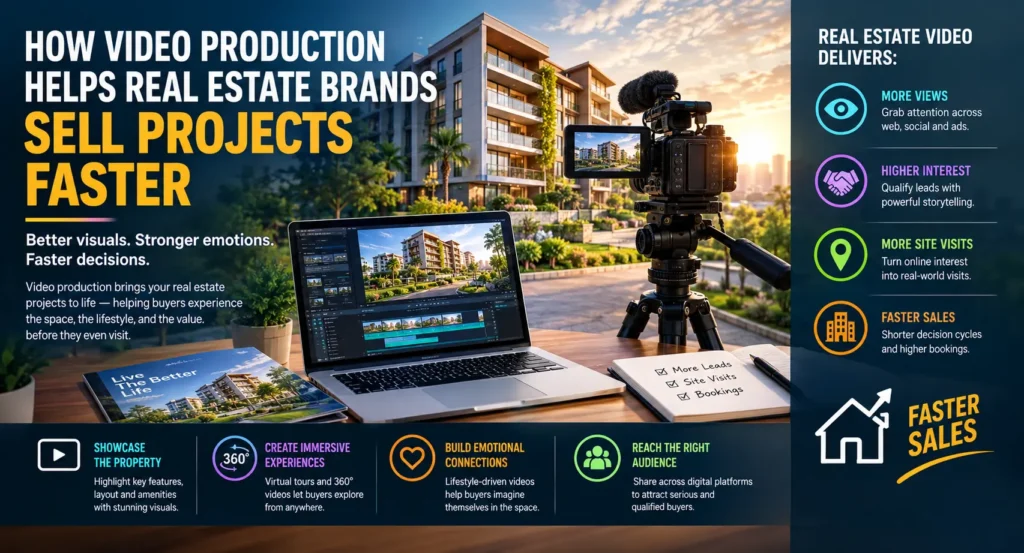
A buyer deciding between two under construction projects rarely visits both sites before making a shortlist. They decide what to visit based on what they see online first. For real estate brands, that means the sales cycle often starts and ends with video, long before a sales executive ever picks up the phone.
This is why more real estate developers are treating video production as a sales tool, not a marketing afterthought. Here is how it actually moves projects faster, and what to get right before investing in it.
Why Video Has Become the First Site Visit
Most homebuyers and investors now do their initial research entirely online. A project video often functions as their first walkthrough, long before a physical visit happens. If that video is weak, unclear, or generic, many buyers never book the actual site visit at all.
A few reasons video carries this much weight for real estate specifically:
-
- Projects are often sold before or during construction, so there is no finished property to show in person
-
- Buyers are comparing multiple projects at once and need a fast way to judge scale, quality, and location
-
- High ticket size purchases require more trust signals before a buyer commits time to a site visit
-
- Video communicates scale, layout, and amenities in a way that photos and brochures cannot
Where Video Actually Shortens the Sales Cycle
Cutting down unqualified site visits
A detailed project video, amenities walkthrough, or drone flyover lets buyers self-select before booking a visit. Sales teams end up spending time with buyers who are already convinced of the basics, instead of walking every lead through the same introductory explanation on site.
Giving remote and NRI buyers a real alternative to visiting
Non-resident buyers and out of city investors make up a meaningful share of real estate demand in many markets. A strong virtual walkthrough or 3D video can move these buyers from interest to booking without requiring a flight or a long-distance trip.
Building trust before construction is finished
Renders and floor plans only go so far. A well produced video showing actual site progress, quality of construction, and the surrounding neighborhood builds a level of trust that static images cannot match, especially for buyers wary of delayed or mismatched projects.
Supporting the sales team, not replacing it
A good project video does not close the sale on its own. It gets the buyer to the table already informed, so the sales conversation focuses on pricing, unit selection, and closing, rather than basic project education.
The Types of Video That Matter Most for Real Estate Projects
Project overview and brand film
A polished two to three minute film that introduces the project’s vision, location advantages, and overall positioning. This is usually the first video a prospective buyer sees, often through paid ads or the project’s landing page.
Drone and aerial footage
Aerial shots communicate scale, layout, and proximity to landmarks in a way ground-level photography cannot. For large townships or gated communities, drone footage is often the single most persuasive asset in the entire marketing package.
Unit and amenity walkthroughs
Room-by-room walkthroughs of sample flats, clubhouse, pool, and common areas help buyers picture daily life in the project, which is often the emotional tipping point in a purchase decision.
Construction progress updates
Short, regular video updates showing real construction progress reassure existing buyers and build credibility with prospects who are wary of delays, a genuine concern in many real estate markets.
Testimonial and investor videos
Video testimonials from existing residents or investors carry more weight than written reviews, particularly for large ticket purchases where buyers are actively looking for reasons to trust the developer.
Sales enablement videos
Shorter, more technical videos built specifically for the sales team to use during calls or site visits, covering pricing structures, payment plans, or comparison points against competing projects.
What Real Estate Brands Get Wrong with Project Videos
-
- Treating the video as a one time asset instead of an ongoing content stream through the project’s construction and sales cycle
-
- Overusing renders and animations without enough real footage, which can make an actual project look less credible, not more
-
- Skipping drone footage for projects where location and scale are genuinely the strongest selling points
-
- Producing one generic video and reusing it across every channel, instead of cutting shorter versions for social media, ads, and sales calls
-
- Not updating video content as construction progresses, leaving prospective buyers looking at outdated visuals
A Practical Video Plan for a Project Launch
- Pre-launch: a brand film establishing the vision, location, and positioning, paired with renders and site plan visuals
- Launch phase: drone footage of the site, sample flat walkthroughs, and a shorter cutdown for paid social and search ads
- Mid-construction: periodic progress update videos to maintain buyer confidence and support ongoing sales conversations
- Near possession: testimonial videos from early buyers, finished amenity walkthroughs, and updated drone footage showing the completed structure
- Throughout: short sales enablement clips the team can send directly to leads during follow-up calls
How to Choose a Video Production Partner for Real Estate Projects
-
- Ask to see previous real estate work specifically, not just general corporate or brand film samples, since the shot list and pacing for project videos differ meaningfully from other categories
-
- Confirm they can handle drone and aerial permissions where required, since this varies by location and project type
-
- Ask how they plan for ongoing content, not just a single launch film, since most projects need a video plan that spans the full sales cycle
-
- Check whether they understand your target buyer, since a video aimed at first-time homebuyers looks and sounds different from one aimed at investors or NRI buyers
FAQ
1. How much does real estate project video production typically cost?
Costs vary widely based on project scale, drone requirements, and how many video assets are needed across the sales cycle. A single launch film costs less than a full plan covering pre launch through possession, but the full plan is usually what actually moves the sales needle.
2. Is drone footage necessary for every real estate project?
Not always, but it matters most for large townships, gated communities, or projects where location and scale are core selling points. For smaller standalone buildings, ground level walkthroughs may be sufficient.
3. How often should a developer update project videos during construction?
Most brands benefit from a progress update every few months, timed around visible construction milestones. This keeps existing buyers confident and gives the sales team fresh content to share with prospects.
4. Can video really replace a physical site visit?
Not entirely, but it can significantly reduce the number of visits needed to convert a serious buyer, and it can fully replace the visit for remote or out of city buyers who would otherwise not visit at all before booking.
5. What is the biggest mistake real estate brands make with video marketing?
Treating video as a single launch asset instead of an ongoing content stream. Buyers researching a project months after launch deserve to see current, relevant footage, not a video that was only ever meant for day one.
Final Thoughts
Real estate is a high trust, high consideration purchase, and video has become the fastest way to build that trust before a buyer ever steps on site. Brands that treat video as an ongoing part of the sales process, not a one-time launch asset, consistently see shorter sales cycles and more qualified site visits.
If you are planning a project launch or want to build a video plan that supports your sales team through the full cycle, Bandish Studios can help you build it.