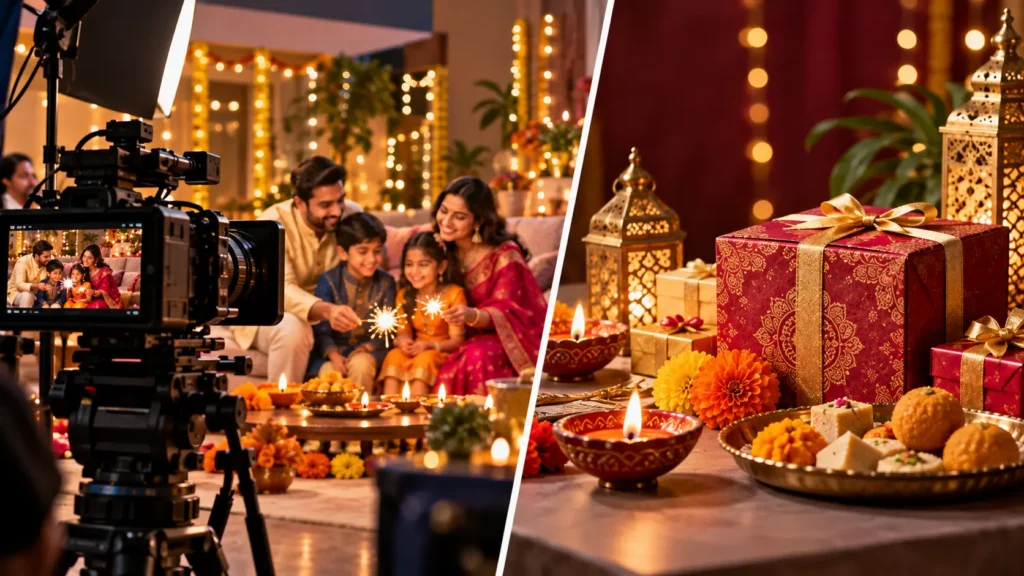
Every Diwali, marketing teams hit the same decision point. The budget is fixed, the deadline is close, and someone asks whether the money should go into video or into static creatives. Video feels more powerful but costs more and takes longer. Static is faster and cheaper but risks getting lost in a feed full of festive banners.
The honest answer is that neither format wins everywhere. Each does a different job, and Diwali is a season where both jobs matter. This guide breaks down where video wins, where static wins, and how to split your festive budget so you are not guessing.
Why This Question Matters More During Diwali
Festive weeks change how people behave online. Feeds get louder, ad costs rise, and attention gets split across dozens of brands running similar offers. In that environment, the format you choose affects three things at once: whether anyone notices your ad, whether they feel anything when they do, and whether they take the next step.
That is why a blanket rule like “video always beats static” or the reverse rarely holds up. What matters is which format fits which stage of the buyer’s journey during the season.
Where Video Ads Win During Diwali
Emotion and memorability
Diwali is an emotional season, and video is the best format for carrying emotion. Music, faces, family moments and small human details land far more strongly in motion than in a still frame. If your goal is to be remembered, video has a clear advantage.
Stopping the scroll
Movement catches the eye. In a crowded festive feed, a strong first two seconds can earn attention that a static image has to work harder for.
Telling a story and an offer together
A thirty second video can set up a festive moment and then land an offer. A static ad usually has to choose between the feeling and the message.
Platform reach
Reels, Shorts and in feed video are heavily favoured by platforms right now, which often helps video creatives reach more people for the same spend, especially for awareness and consideration objectives.
Where Static Ads Win During Diwali
Speed and cost
Static creatives are quicker and cheaper to produce, which matters when Diwali timelines are tight. You can make several variations in the time it takes to edit a single video.
Clear, direct offers
A static ad with a bold headline, a product image and a clear price or discount communicates in a glance. For direct response goals like a Dhanteras gold offer or a limited time electronics deal, that clarity can convert well.
Retargeting and reminders
For people who have already seen your brand, a simple static reminder with the offer and a button is often enough. It does not need to tell the story again.
Easy testing
Because static is cheap to produce, it is easier to test multiple headlines, images and offers quickly and keep what works.
Video vs Static at a Glance
| Video Ads | Static Ads | |
|---|---|---|
| Best for | Awareness, emotion, consideration | Direct offers, retargeting, quick testing |
| Strength | Memorability and storytelling | Speed, clarity and low cost |
| Production time | Longer | Shorter |
| Cost to produce | Higher | Lower |
| Risk | Slow to make, harder to change late | Easy to blend into a crowded feed |
| Diwali fit | Hero campaign and cutdowns | Offer pushes and reminders |
Match the Format to the Funnel Stage
The most useful way to settle the debate is to stop asking which format is better and start asking which stage you are working on.
- Awareness: lead with video. A hero film and short cutdowns help people notice and remember you before they are ready to buy.
- Consideration: mix both. Video shows what the product or brand feels like, and static carousels or comparison creatives help people evaluate.
- Conversion: lean on static and short, offer led video. Make the offer, price and action obvious.
- Retargeting: use static reminders and short video snippets. Keep it simple and urgent.
A Practical Budget Split for Diwali
There is no universal ratio, because category, margin and audience all change the answer. A reasonable starting point many brands use is to invest in one strong video idea, then cut it into several short versions, and support it with a set of static creatives built from the same shoot. For example:
- One hero video to carry the festive idea and anchor the campaign
- Three to five short cutdowns for Reels, Shorts and stories
- A set of static creatives pulled from the same shoot, covering offers, product highlights and retargeting
- A small testing budget to see which combination drives results, then shift spend toward the winners mid season
The key point is that these are not competing budgets. Planned together, a single shoot day can supply both the video and the static assets, which makes the whole campaign cheaper and more consistent.
Common Mistakes When Choosing Between Them
- Treating the choice as either or, instead of building a video led campaign supported by static assets
- Using a video that is really just a slideshow of a static ad, which gives you the cost of video without the benefit
- Running static only because it is cheaper, then wondering why the campaign feels forgettable
- Running video only and skipping simple offer creatives, which makes conversion harder
- Not testing, and committing the whole budget to one format before any data comes in
- Judging by views alone. Look at cost per result, click through, conversions and returns instead
How to Test Quickly During the Season
Diwali moves fast, so testing needs to be quick and simple. Run a small set of video and static creatives against the same audience and objective, keep the offer the same, and compare cost per result after a few days. Shift budget toward whichever format is performing for each funnel stage, rather than declaring one overall winner. Keep fresh creatives ready, because festive audiences tire of the same ad quickly.
FAQ
1. Do video ads always perform better than static ads for Diwali?
No. Video often wins for awareness and emotional connection, while static can perform very well for direct offers, retargeting and quick testing. The better question is which format suits each stage of your campaign.
2. Is video too expensive for small brands during Diwali?
It does not have to be. One well planned shoot can produce a hero video, several short cutdowns and a set of static creatives, which spreads the cost across the whole campaign.
3. Should I use both video and static in the same campaign?
In most cases, yes. A video led campaign supported by static offer creatives and retargeting ads usually covers more of the buyer journey than either format alone.
4. How long should a Diwali video ad be?
It depends on the placement. Short cutdowns of fifteen to thirty seconds work well for Reels, Shorts and paid social, while a longer hero film can live on YouTube, your website and connected TV.
5. How do I know which format is working?
Compare cost per result, click through rate and conversions for each format against the same audience and offer. Do not rely on views or likes alone.
6. When should I start producing Diwali creatives?
As early as possible. Production, approvals and media setup all take time, and the weeks right before Diwali are the most crowded. If you are already close to the festival, keep the scope small and focus on one strong idea with a few formats.
Final Thoughts
For Diwali campaigns, the real winner is rarely video or static alone. Video builds the memory and emotion that makes people care, and static makes the offer clear and the next step easy. Planned together from a single shoot, they work as one system instead of two competing budgets.
If you want a Diwali campaign that covers the hero film, the short cutdowns and the static creatives in one efficient production plan, Bandish Studios can help you build it.